Breaking Down in Tule Fog on I-5 or 99
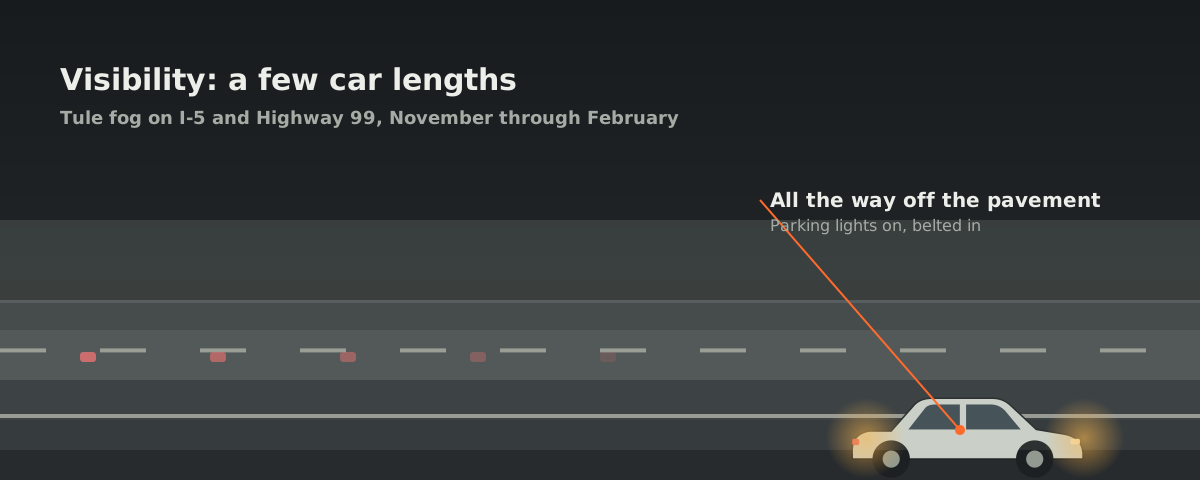
Tule fog is the Central Valley’s signature hazard. On still winter nights after rain, cold air settles on the valley floor and the ground releases moisture, and by morning a dense, low fog covers everything from Lodi to Tracy. On I-5 and Highway 99, visibility can drop to a few car lengths with almost no warning, and it often stays that way until late morning.
A breakdown is stressful on any day. In fog, a stopped car is a hazard that other drivers may not see until they are almost on top of it. Here is what to do.
The five steps
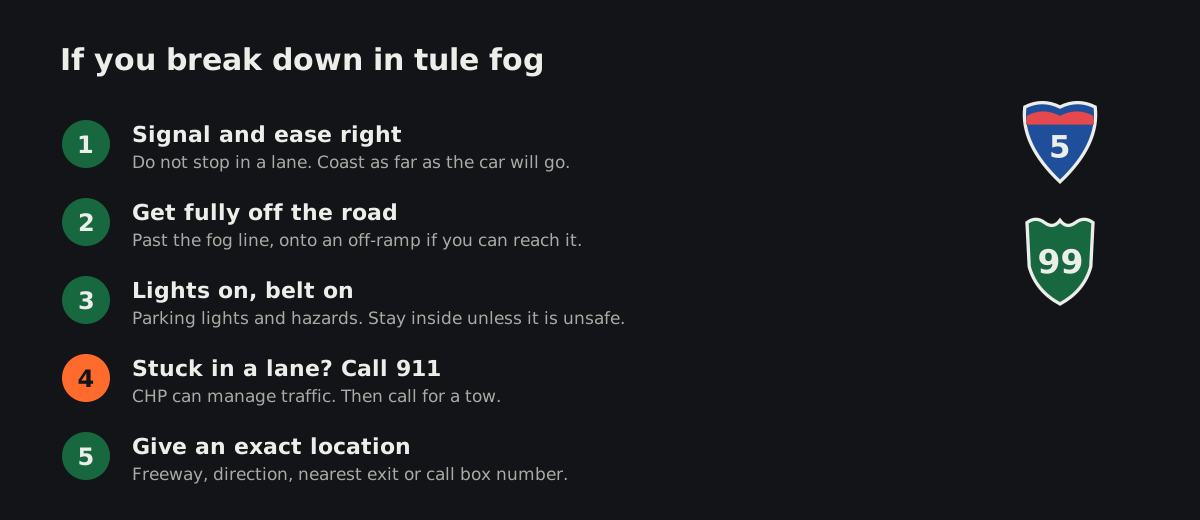
1. Signal and ease right, but do not stop in a lane
The moment you feel something wrong, such as a warning light, a loss of power or a flapping tire, signal and start easing right. Use whatever momentum you have to reach the shoulder. Do not brake hard. The driver behind you may be closer than you think and may not see your brake lights until late.
2. Get fully off the road
The goal is to have no part of your car in a travel lane. Aim past the solid white fog line, as far right as the shoulder allows. If an off-ramp is within reach, take it. A dark ramp in Stockton is far safer than the shoulder of the mainline.
Avoid the left shoulder. On many stretches of I-5 and 99 it is narrow and sits right beside the fast lane, where traffic is moving quickest.
3. Lights on, belt on
Turn on your hazards and your parking lights. In fog, headlights alone can be confusing, because drivers may think you are moving in the lane. Stay in the car with your seat belt fastened unless it is clearly safe to get out and move well away from the road, behind a guardrail or up an embankment. In a fog collision, the people standing next to the stopped car are the ones most likely to be hurt.
Do not stand between your car and traffic, and do not try to wave other cars around you.
4. If you are stuck in a lane, call 911
If the car stopped in a travel lane and will not move, call 911 right away. This is an emergency, not a roadside call. CHP can manage traffic and get help to you quickly. Call for a tow once you are safe.
5. Give an exact location
When you call, be as specific as you can. Give the freeway and direction (“northbound I-5”), the last exit you passed or the next one you see, and any landmarks. Mile markers and call box numbers along the shoulder are useful. A dispatcher who knows exactly where you are can get a truck to the right side of the median the first time.
Why fog breakdowns are worse here
The valley is flat, and the freeways here are straight, so drivers settle into high speeds and then hit fog banks that can be much thicker in one low spot than a mile up the road. That is why multi-vehicle pileups have happened on both I-5 and Highway 99 in San Joaquin County. Big rigs add to the risk, because a fully loaded truck needs a long distance to stop.
Fog season usually runs from November through February. It tends to be densest in the early morning and after rain, and around the low-lying land near the Delta and the San Joaquin River.
Preventing the breakdown in the first place
- Check your lights. Burned-out tail lights are hard to notice and dangerous in fog.
- Keep your battery healthy. Valley summers weaken batteries, and the first cold, damp morning is often when they fail.
- Watch your tires. Fix a slow leak at home, not on a foggy shoulder.
- Leave earlier and drive slower. Use low beams, since high beams bounce off the fog.
- Consider waiting it out. If you can, delay a trip until the fog lifts.
When to call us
Once you are safely off the road, call (209) 850-ROAD and a dispatcher will ask where you are, what the car is doing and where it should go, then give you the price and an ETA before sending a truck. If it turns out you just need a jump start or a tire change, that is what gets sent.