How Much Does a Tow Cost in Stockton?
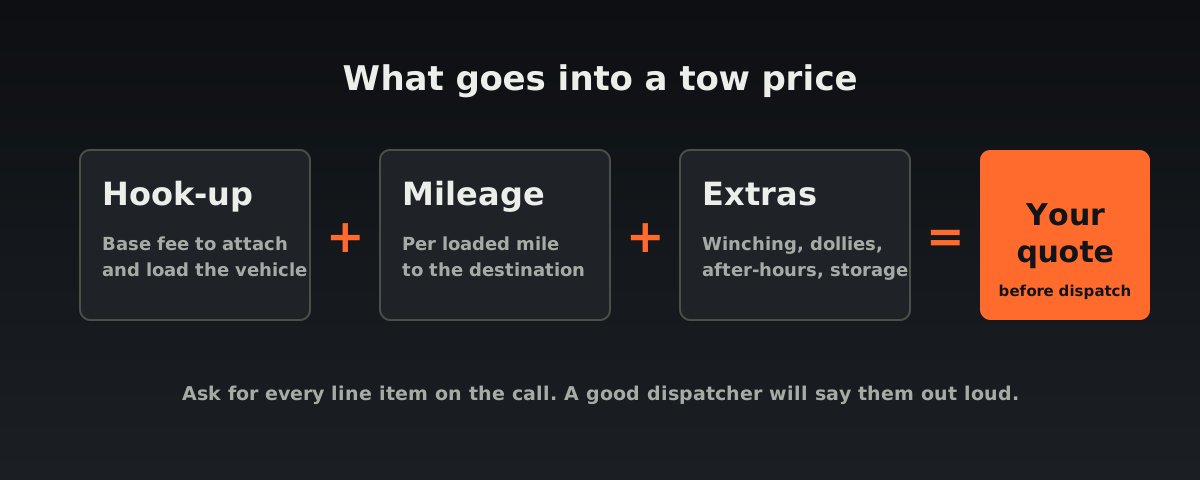
If you are reading this on the shoulder of Highway 99, here is the short version. A tow in Stockton is usually priced as a hook-up fee plus mileage, with extras when the job needs more than a simple pickup. Ask for the total before you agree, and get it in plain numbers.
The rest of this guide walks through each part.
The three parts of almost every tow price
The hook-up fee. This is the base charge for the truck coming out and loading your vehicle. It covers the operator’s time, fuel to reach you and the equipment. Some operators include a few miles in it, and others start the meter at zero.
Mileage. You pay for loaded miles, from where your car is picked up to where it is dropped off. This is usually the biggest variable. A run across Stockton from the Miracle Mile to a shop off March Lane is a few miles. A tow from Tracy over the Altamont to a Livermore dealership is a very different number.
Extras. These cover anything beyond a simple pickup:
- Winching, if the car is in a ditch, a soft orchard row or down a levee bank
- Dollies or skates, if the car is stuck in park, has no keys or has a locked wheel
- After-hours or holiday rates, which some operators charge late at night
- Storage, if the car goes to a yard rather than straight to a shop
- Heavy duty equipment for RVs, box trucks and anything over a normal passenger car’s weight
How distance changes the quote
Mileage drives most of the difference between a small bill and a large one. These are rough road distances from central Stockton to places people commonly have cars towed:
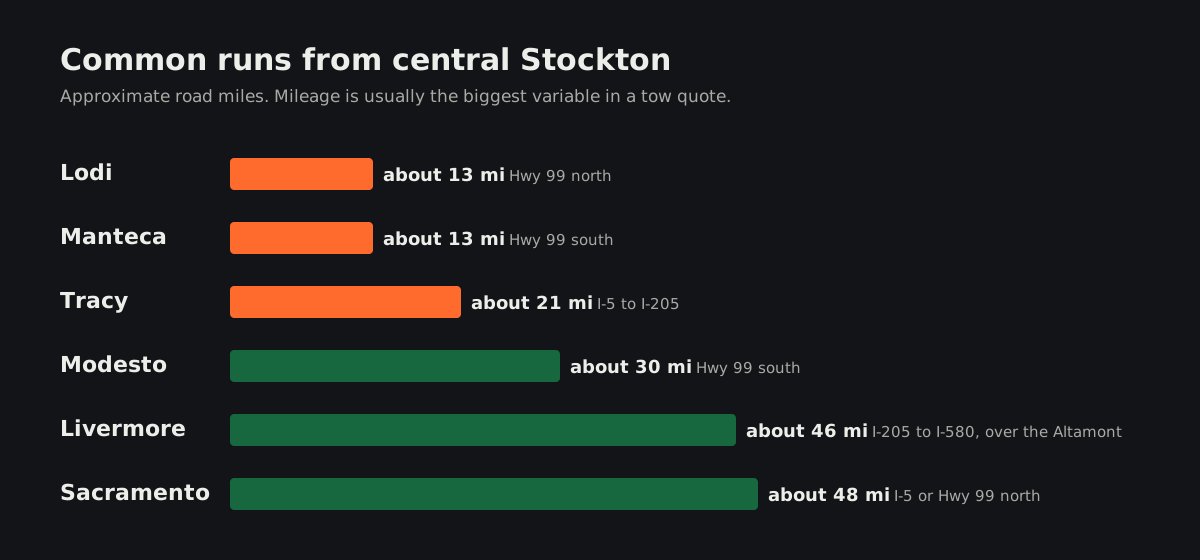
If your regular mechanic is in Lodi and you broke down in Tracy, it is worth asking for two quotes. One goes to your mechanic and one goes to a good shop near where you are. The difference can be large, and plenty of honest shops in Tracy and Manteca can handle routine repairs.
What a fair quote sounds like
A good dispatcher says the numbers out loud before anything is sent: the hook-up fee, the mileage rate or total miles, and anything extra the job will need. If you hear “we’ll figure it out when the driver gets there,” ask again. If you still do not get a number, call someone else.
It also helps to give accurate details up front. If the car is all-wheel drive or electric, say so, because it needs a flatbed. If the car is in the dirt rather than on the pavement, say that too. Surprises at the roadside are where most price disputes start, and most can be avoided with a two-minute conversation.
Things that legitimately push the price up
- The car will not roll or steer. It needs dollies, skates or more winching to load.
- The car is off the road. A winch-out is a separate job from the tow itself.
- Large or heavy vehicles. Lifted trucks, RVs, box trucks and buses need bigger equipment.
- Long distance. More loaded miles, plus the truck’s trip back.
- Time of day. Some operators charge more late at night or on holidays.
None of those are tricks. They reflect real differences in the work, and a reasonable operator will explain each one if you ask.
Things that should make you wary
- No price until the car is hooked up. Once it is loaded, you have far less leverage.
- A truck that just shows up. At a crash scene, a tow truck nobody called is a red flag. If police are on scene, let them handle it, or call your own.
- Pressure to use a particular shop. You choose where your car goes. You are not required to use the body shop the driver recommends.
- Cash only, with no receipt. Always ask for an itemized receipt.
When you might not need a tow at all
A surprising number of calls end without a tow. If the car clicks but will not start, a jump might be all it needs. A flat with a good spare is a short roadside job. If you simply ran out of gas, fuel delivery gets you to a pump for a fraction of the cost of a tow. When you call, describe what is happening, and a good dispatcher will suggest the cheaper fix when it fits.
Will insurance or a roadside plan cover it?
Many auto policies include roadside or towing coverage, and some credit cards and new-car warranties do too. Coverage usually reimburses up to a set amount or distance. Keep your receipt and check the details on your policy. After a collision, a tow to a repair shop is generally covered under collision coverage or by the at-fault driver’s insurer, though you may need to pay first and be reimbursed.
If you need a truck now, call (209) 850-ROAD and the dispatcher will give you the price and an ETA before anything is sent. See 24 hour towing in Stockton for more on how a call works.